
TechVolver
Robotic pipette calibration system for GMP laboratories — ML-based computer vision for pipette detection, custom actuators for automatic volume adjustment, UR cobot integration, precision balances, environmental sensors, and LIMS-connected data pipeline. From concept to validated GMP deployment.

Every pipette in a GMP lab has to be calibrated. Regularly. Precisely. In pharma, biotech, and clinical labs, a miscalibrated pipette doesn’t just ruin an experiment — it invalidates entire batches, triggers compliance events, and costs real money.
The process? Tedious. A technician picks up each pipette, manually sets the volume, aspirates and dispenses water onto a precision balance, records the weight, repeats — dozens of times per pipette, hundreds of pipettes per year. Repetitive strain injuries are common. Data integrity depends entirely on the human in the loop.
TechVolver asked us to make the machine that does this automatically. We designed and built the core system — the ML vision pipeline that identifies and classifies pipettes, the custom actuators that grip and rotate different pipette types to set volume, and the robotic integration that orchestrates the full calibration cycle inside a GMP-validated cabinet.
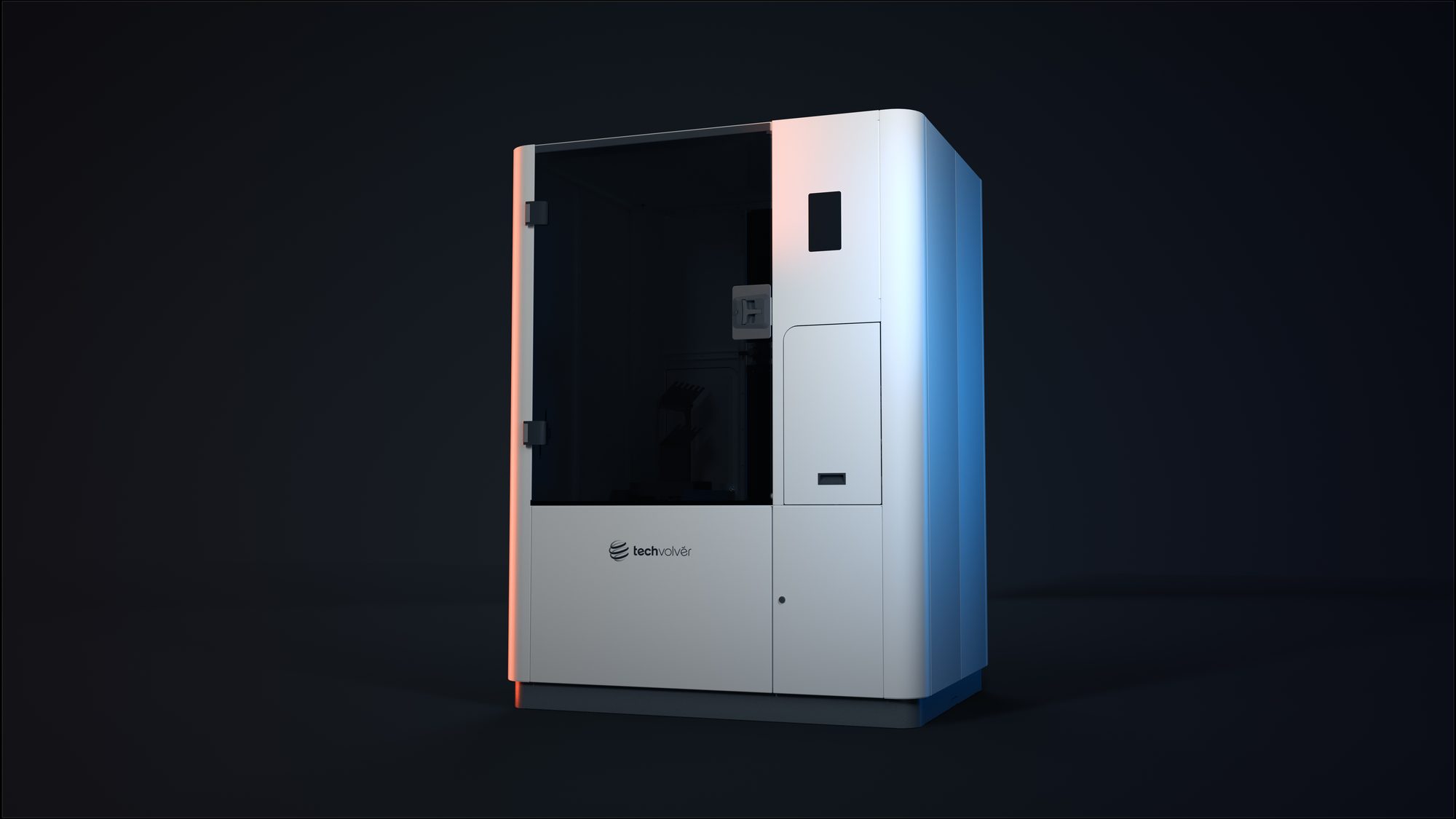 Calvolver: a cabinet placed in your lab. Inside, a robot arm handles every pipette automatically.
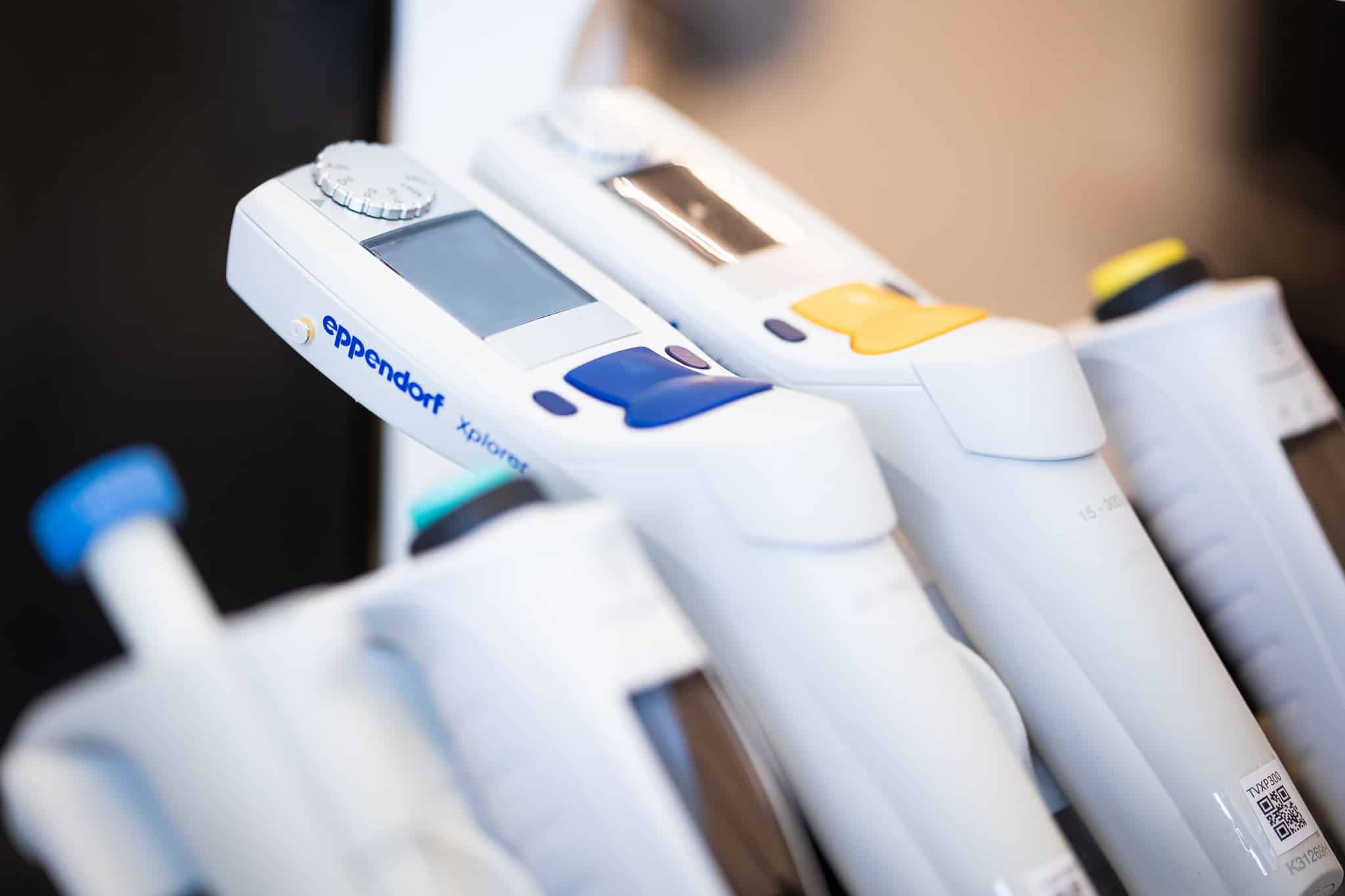 Eppendorf, Gilson, Brand, Rainin — Calvolver handles all major pipette brands and types.
The problem
Manual pipette calibration is a universally hated job. In a typical pharma lab with 200+ pipettes, each requiring periodic calibration against ISO 8655, the process eats hundreds of technician-hours per year. The work is physically straining — repetitive thumb actuation causes injuries in approximately 30% of lab technicians who pipette frequently.
Worse, the data pipeline is fragile. Manual readings from precision balances are hand-entered into spreadsheets or LIMS. Every transcription step introduces error risk. In GMP environments, this means additional review cycles, paper asset logs, and compliance overhead just to maintain data integrity around a fundamentally manual process.
Most labs either burn internal staff time or ship their pipettes to external calibration providers — where they’re gone for 5–10 business days per batch. Neither option is good. Both are expensive.
TechVolver set out to automate the entire process. They needed someone who could build the hard parts.
”We have reduced pipette downtime to practically ZERO…”— Jan Joensen, DTU Biosustain · Customer testimonial
What we built
ML Vision System
Camera-based pipette detection and classification. The system identifies pipette make, model, and type on pickup — then determines the correct grip strategy and volume adjustment method. No manual configuration per pipette.
Custom Volume Actuators
Mechanical actuators that grip and rotate pipette volume dials with sub-microliter precision. Different pipette brands have different adjustment mechanisms — twist dials, plunger buttons, digital controls. We designed actuators that handle them all.
Cobot Integration
UR (Universal Robots) collaborative robot arm integration. Pick-and-place orchestration for the full calibration cycle: pick pipette from rack, identify it, set volume, aspirate, dispense onto balance, record, repeat, return to rack.
Precision Measurement Stack
Analytical balances, temperature sensors, humidity sensors, barometric pressure logging. All environmental parameters needed for ISO 8655 gravimetric calibration — logged automatically with every measurement.
GMP Data Pipeline
Calibration results written directly to LIMS or customer-defined data format. No manual transcription. Full audit trail. 100% data integrity by design — not by review process.
System Architecture & Validation
End-to-end system architecture for a GMP-validated automated instrument. CE compliance, FAT/SAT qualification, quality agreement framework. Designed for pharmaceutical-grade deployment from day one.
The machine
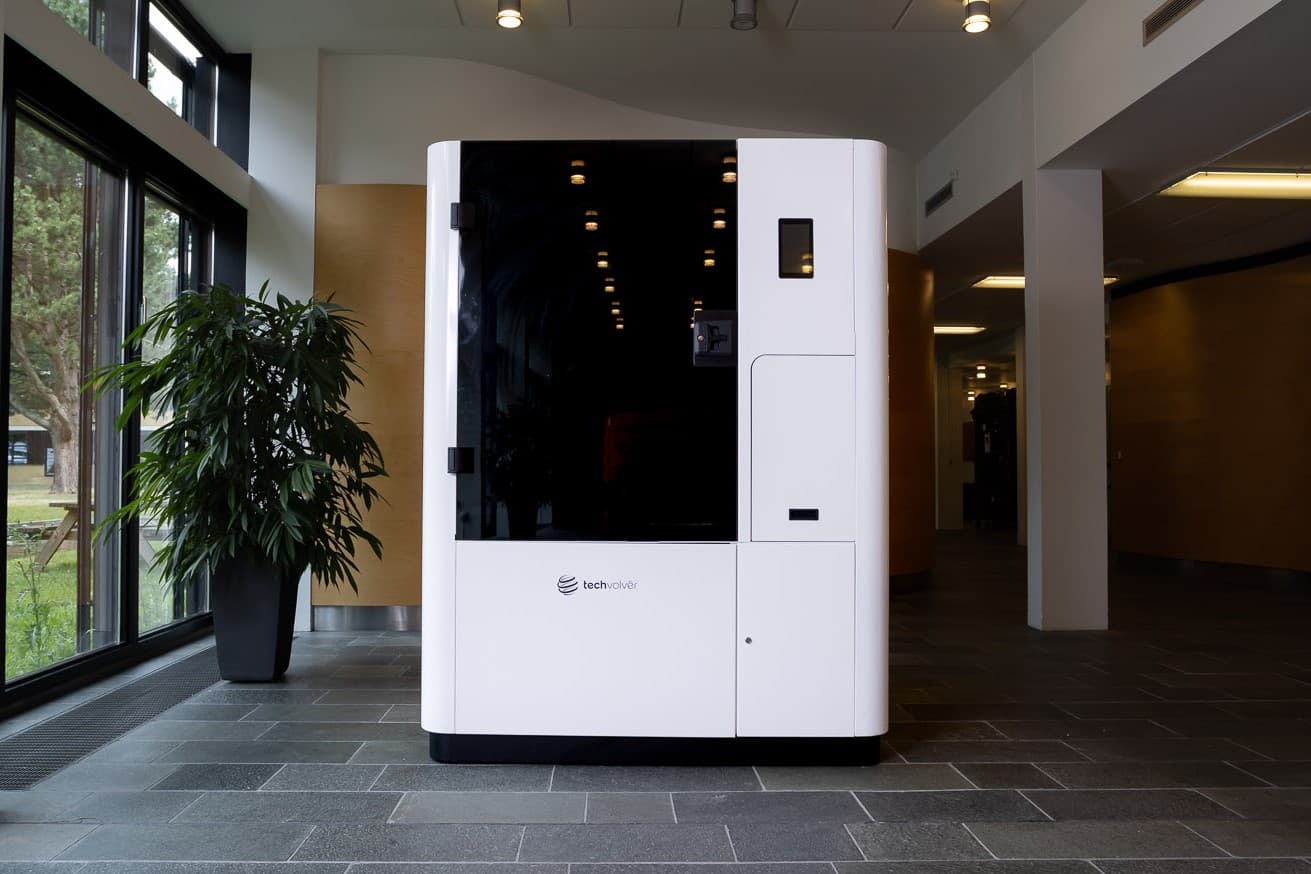 Calvolver installed at DTU Science Park, Kongens Lyngby. A lab-grade cabinet containing a UR cobot, precision balances, sensors, cameras, and custom actuators.
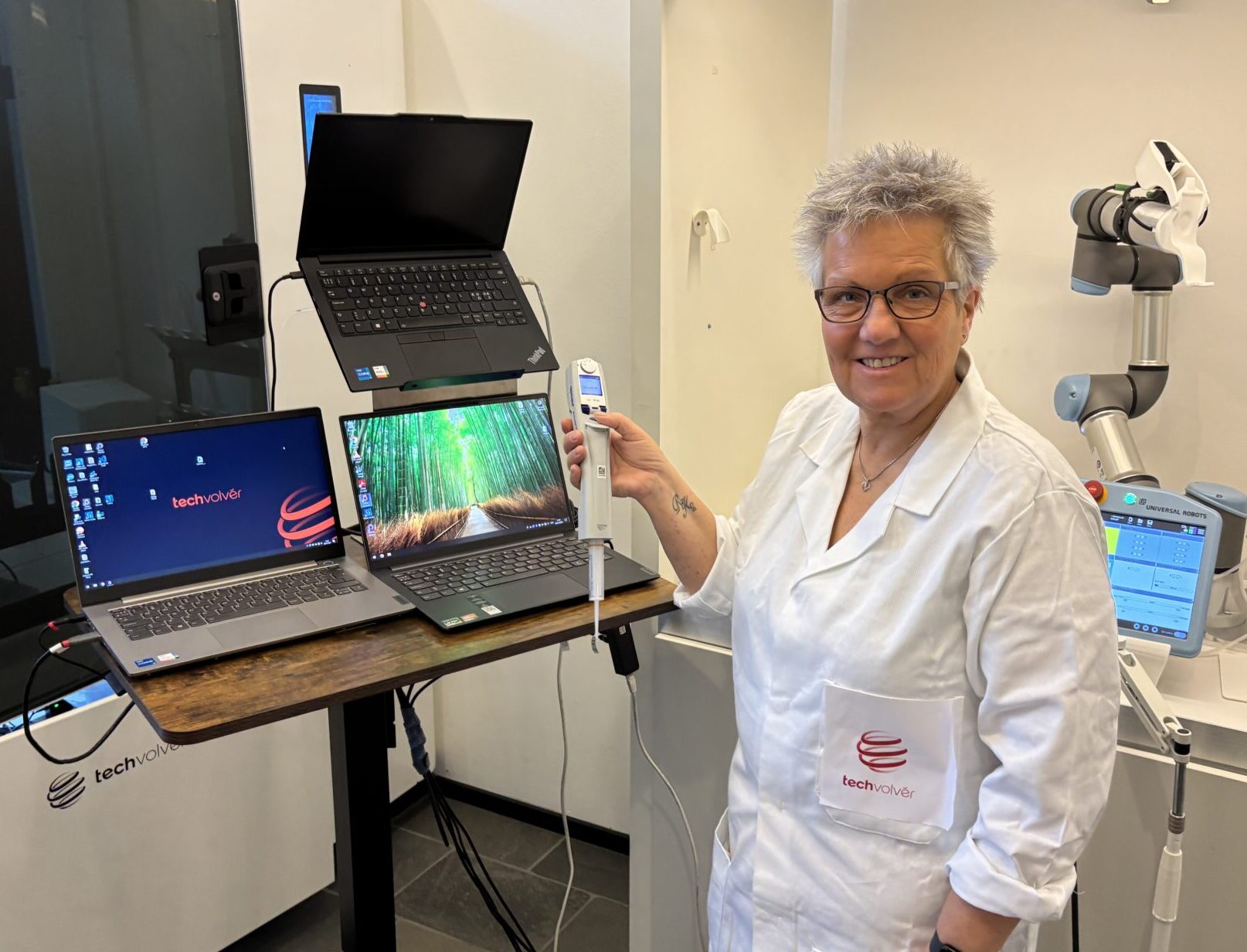 The system at work: pipette in hand, UR robot arm behind, calibration software on screen.
UR Cobot
6-axis collaborative robot arm. Handles pipettes of all sizes with custom end-effector tooling designed for lab instruments.
ML Vision
Camera system with trained ML model. Identifies pipette brand, type, and volume range on pickup. Zero manual setup per instrument.
Custom Actuators
Precision mechanical actuators for volume dial rotation. Handles Eppendorf, Gilson, Brand, Rainin — different mechanisms, one system.
GMP Validated
Full qualification: QRA, FAT, SAT, data I/O validation. CE marked. Designed for pharmaceutical manufacturing environments.
How it works
Load & identify
Technician places pipettes in the cabinet rack and presses start. The system imports calibration specs from the LIMS and the vision system identifies each pipette — make, model, volume range — automatically.
Calibrate
The cobot picks up each pipette, the custom actuator sets the volume, then aspirates and dispenses water onto a precision balance. Temperature, humidity, and pressure are logged. Repeated per calibration spec. Fully unattended.
Report & release
Results are written directly to LIMS. Pass/fail status per pipette. Full audit trail with environmental data. Pipettes that fail are flagged for service. No manual data entry. No review cycle. Pick up and use.
Our role
null2.one designed and built the core automated subsystems — the ML vision pipeline, custom actuator mechanisms, and robotic integration that make Calvolver work. From feasibility study through GMP-validated production deployment.
Vision & ML Pipeline
Camera selection, image processing pipeline, ML model training for pipette classification. The system identifies brand, model, and type without manual configuration — critical for labs with mixed pipette fleets.
Custom Actuator Design
Mechanical design of actuators for pipette volume adjustment. Each brand has a different mechanism — twist dials with different torques, stepped and continuous, digital and mechanical. One actuator system handles them all.
Robot Integration
UR cobot programming and end-effector design. Pick-and-place sequencing, grip force control, collision avoidance within the cabinet. Full calibration cycle orchestration.
System Architecture
Sensor integration, data pipeline, environmental monitoring, LIMS connectivity. End-to-end architecture for a GMP instrument that has to produce legally defensible calibration records.
Building a system where precision and compliance aren’t optional?
We design automated instruments for environments where every measurement has to be defensible. Robotics, vision, sensors, data — one team, one architecture.
Start a conversation