
Charlie Charger
The world's first fingerprint-locked USB charger — taken from napkin sketch to mass-produced consumer electronics. Custom power electronics, biometric firmware, injection molding, ultrasonic welding, and full-scale manufacturing in Asia.
Every household has the same fight. Someone takes the charger. It disappears from the kitchen counter, migrates to a bedroom, gets buried under a couch cushion.
One dad — Charlie — got so fed up he nailed his charger to the kitchen woodwork.
That frustration became a product: a wall charger that only works for the people you authorize. Fingerprint on, power flows. No fingerprint, nothing. The world’s first biometric-locked USB charger.
Charlie Charger came to us with the idea and a rough concept. We took it from there — every discipline, every decision, every component — through to boxed units shipping to customers.
The engineering challenge
Building a fingerprint-locked charger sounds simple until you try to actually do it. The constraints compound fast:
Size. A wall charger has to be small — smaller than most USB-C adapters on the market. Every millimeter counts. Now fit a fingerprint sensor module, a custom power supply, a microcontroller, and an antenna inside that volume. With thermal clearance. And enough structural wall thickness for drop testing.
Power electronics. This isn’t a rebadged Anker. The power supply is custom — designed from scratch to hit 30W USB-C PD output in the smallest possible footprint, with the efficiency and thermal performance to pass safety certification. Every component was selected, not inherited.
Biometric integration. The fingerprint sensor had to be flush-mounted, weatherproof enough for kitchen and bathroom environments, and fast enough that users don’t notice the authentication. The sensor module communicates with our custom MCU firmware that handles enrollment, matching, power gating, and LED status indication. We wrote the fingerprint processing software from the ground up.
Manufacturing. Injection-molded enclosure. Ultrasonic welding for a sealed, screw-free assembly. Multiple plug variants (UK, EU, US, AU) from a single internal design. All of this had to be producible at consumer-electronics cost points in volume manufacturing in Asia.
Industrial Design
Complete enclosure design from CAD to tooling. Multi-region plug variants. Fingerprint sensor integration. Drop-test and thermal simulation.
Power Electronics
Custom 30W USB-C PD power supply. Compact PCB layout with integrated switching, regulation, and protection circuitry. Efficiency optimization for thermal headroom.
Embedded Firmware
Custom biometric firmware — fingerprint enrollment, matching algorithms, power gating logic. LED control, USB-C PD negotiation, OTA update capability.
Mechanical Engineering
DFM for injection molding. Ultrasonic welding joint design. Internal snap fits for screw-free assembly. Thermal management through strategic ventilation.
Supply Chain
Component sourcing and qualification. Fingerprint sensor selection. Supplier negotiation. BOM cost optimization without compromising quality or certification.
Manufacturing
Factory selection in Asia. Injection mold tooling. Ultrasonic welding fixtures. Production test procedures. QC protocols. Retail packaging design.
”We didn’t want another generic charger. We wanted something no one had built before — and null2.one made it real.”— Charlie Charger founder
From sketch to prototype — the iteration grind
The first step was industrial design: translating the product concept into something that could actually be manufactured. We modeled every plug variant (UK Type G, EU Type C/F, US Type A/B, AU Type I) from a common internal architecture — same PCB, same fingerprint module, different shell geometry and pin configuration.
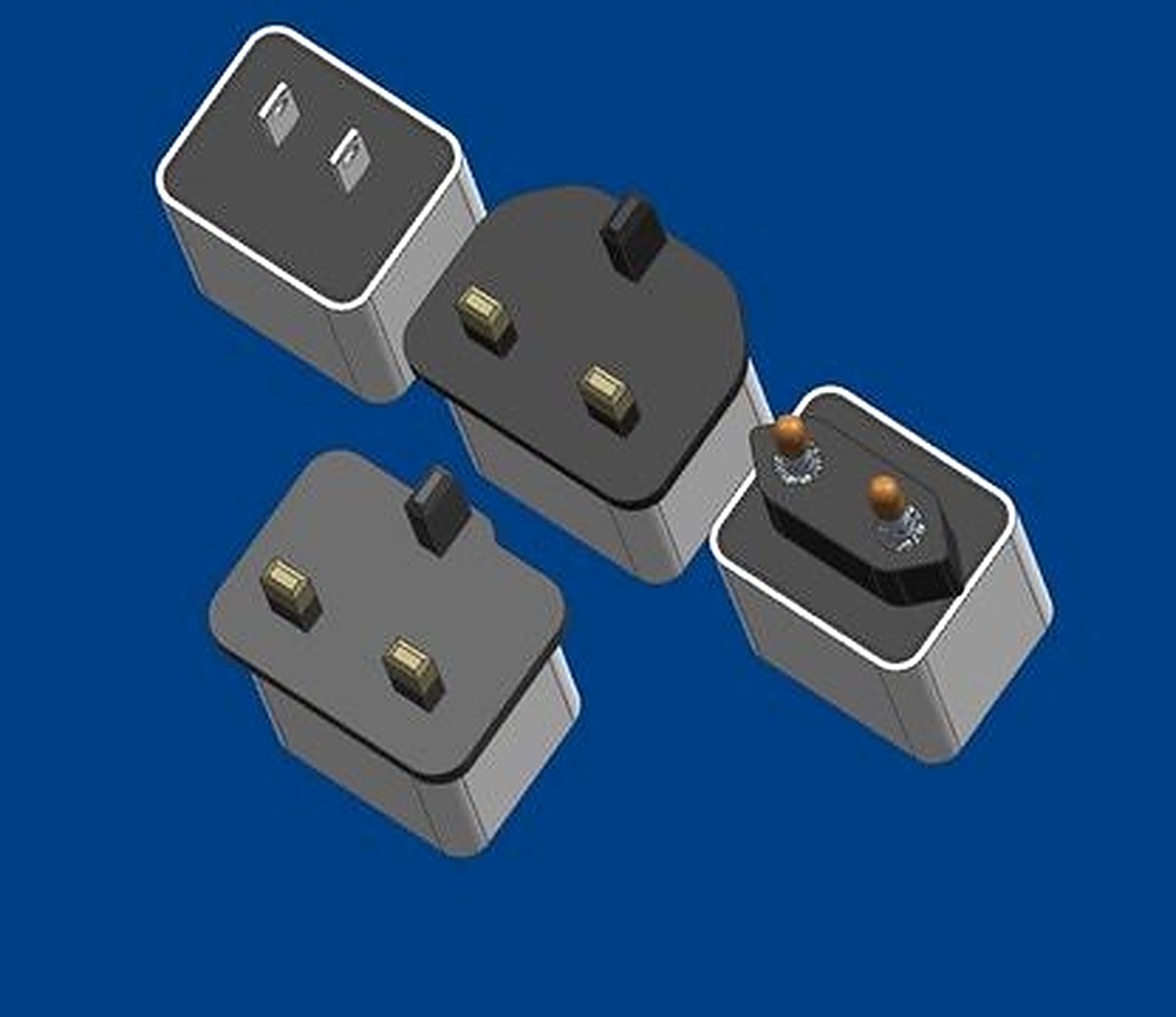 CAD models — four plug variants from a single internal platform. UK, EU, US, AU. Same electronics, different shell geometry.
Then the rapid prototyping cycle began. We 3D-printed dozens of iterations — SLA resin for surface finish validation, FDM for quick dimensional checks. Each round tested a different trade-off: fingerprint sensor position, cable exit angle, internal volume allocation, wall clearance when plugged in.
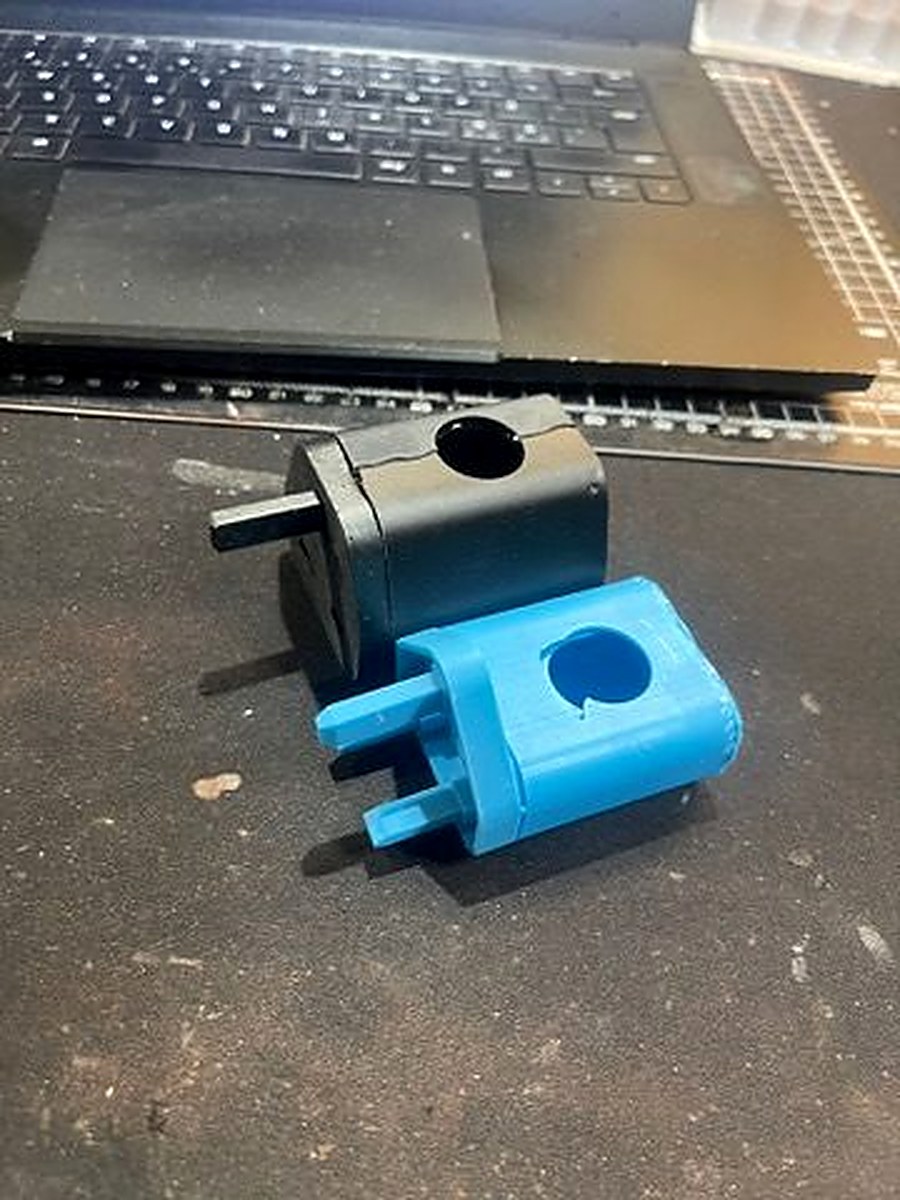 Design iteration. SLA (black) and FDM (blue) prototypes testing form factor and sensor placement.
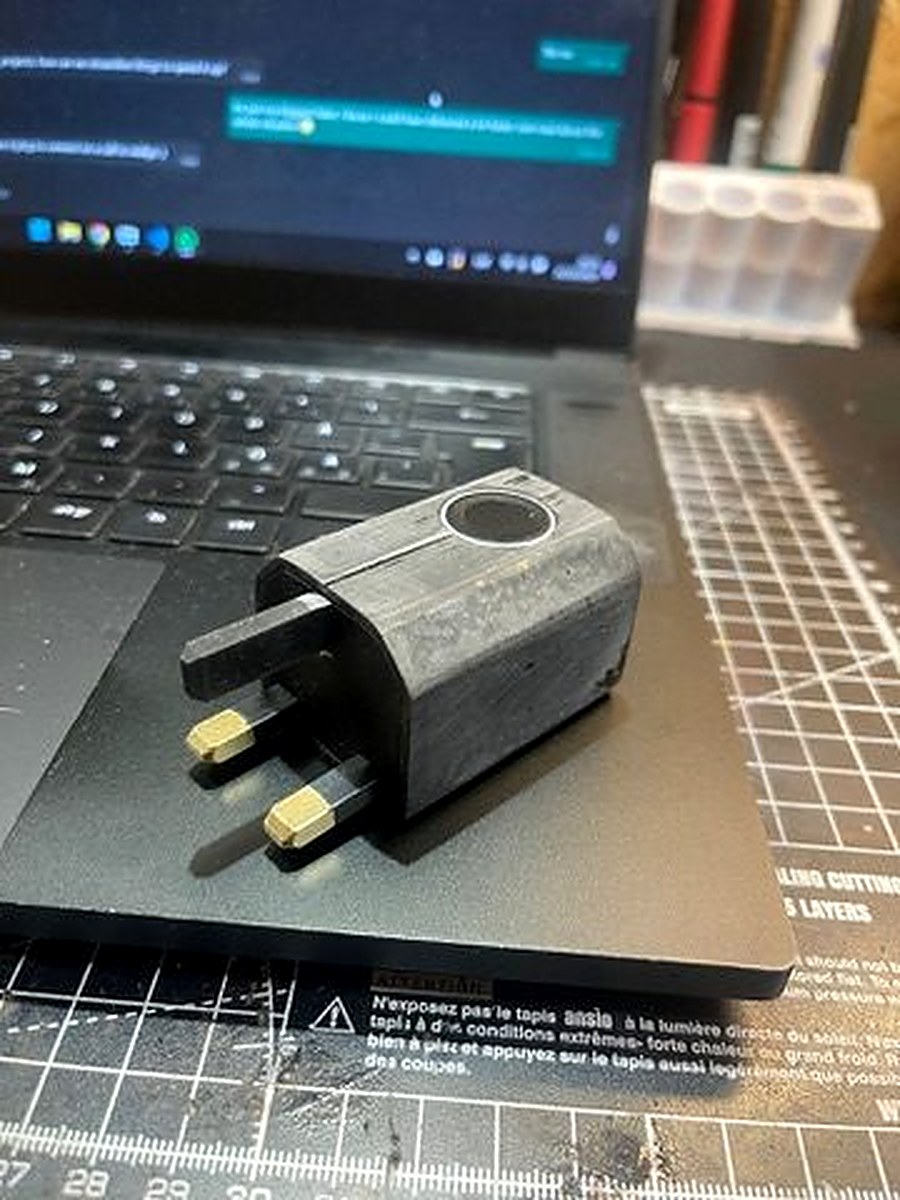 Resin prototype — checking ergonomics, plug clearance, and how it feels to hold against a wall socket.
The prototypes weren’t cosmetic exercises. Each one was a functional test: does the fingerprint sensor read reliably through this wall thickness? Does the cable exit survive 10,000 bend cycles? Is there enough internal clearance for the transformer without thermal hotspots?
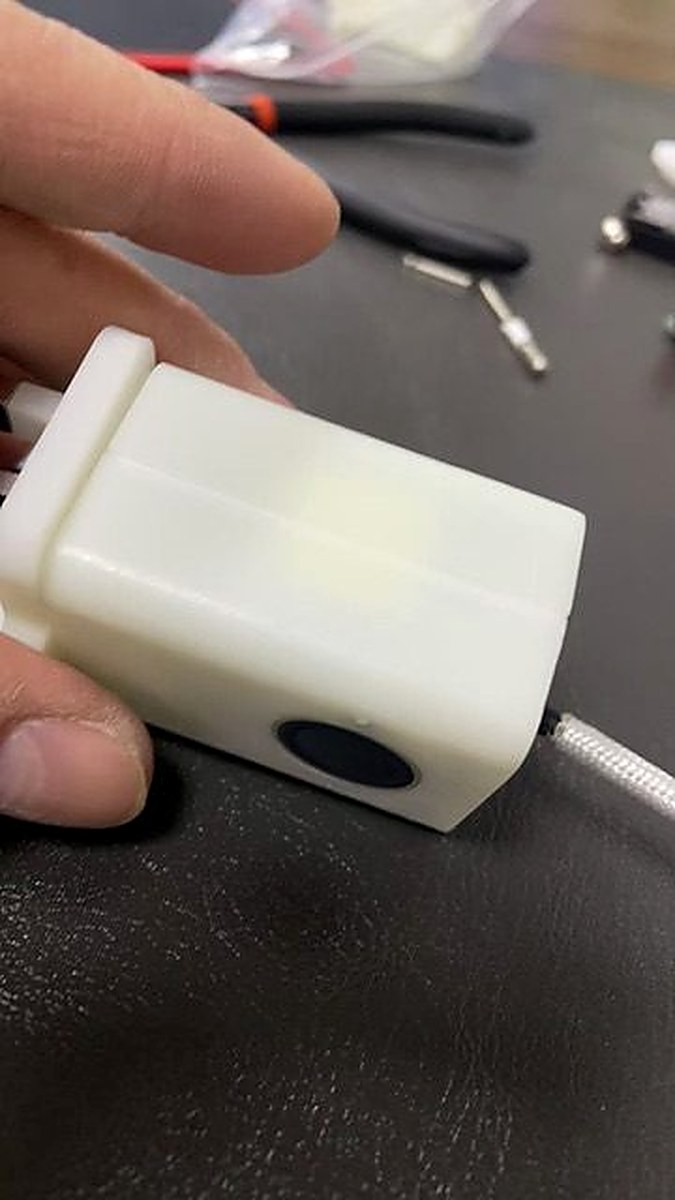 Near-final form factor. Fingerprint window optimized for thumb reach. Smooth walls ready for mold tooling translation.
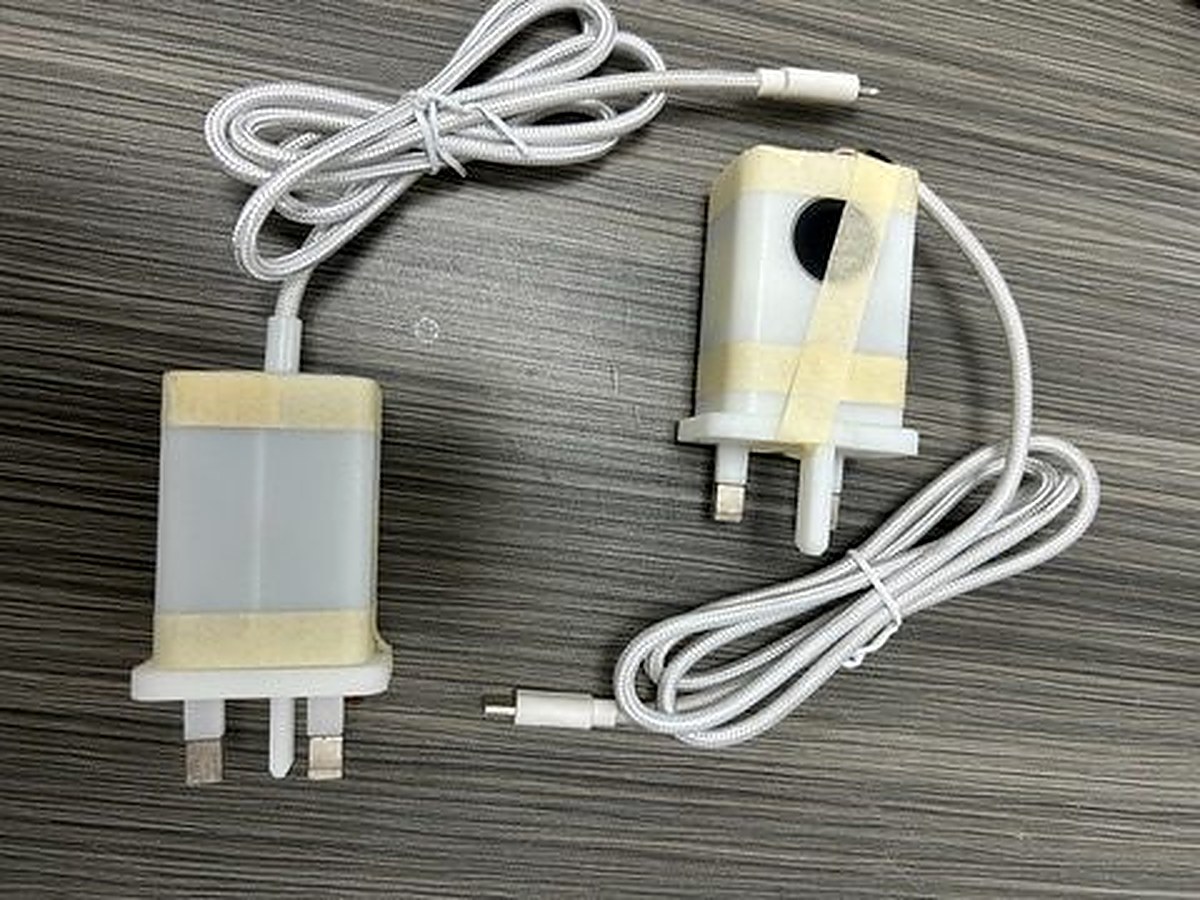 Engineering prototypes — taped, tested, compared, iterated. This is what real product development looks like.
Custom power electronics
The power supply is the heart of the product. Off-the-shelf USB-C PD modules were too large, too expensive at volume, or lacked the control interface we needed for fingerprint-gated power delivery. So we designed our own.
Custom PCB. Custom transformer. Component-level optimization for the smallest possible footprint that still delivers 30W with the efficiency needed to keep thermals manageable inside a sealed, ventilation-limited enclosure.
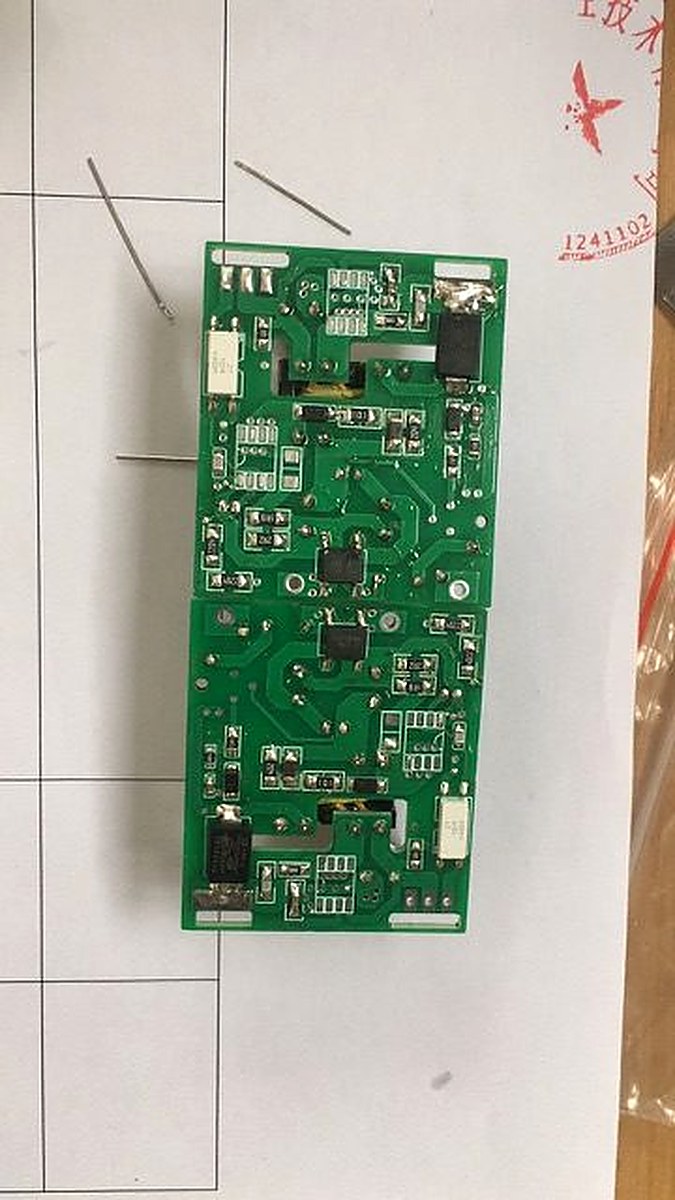 Custom power supply PCB. Every component selected for this specific application — no generic modules, no wasted space.
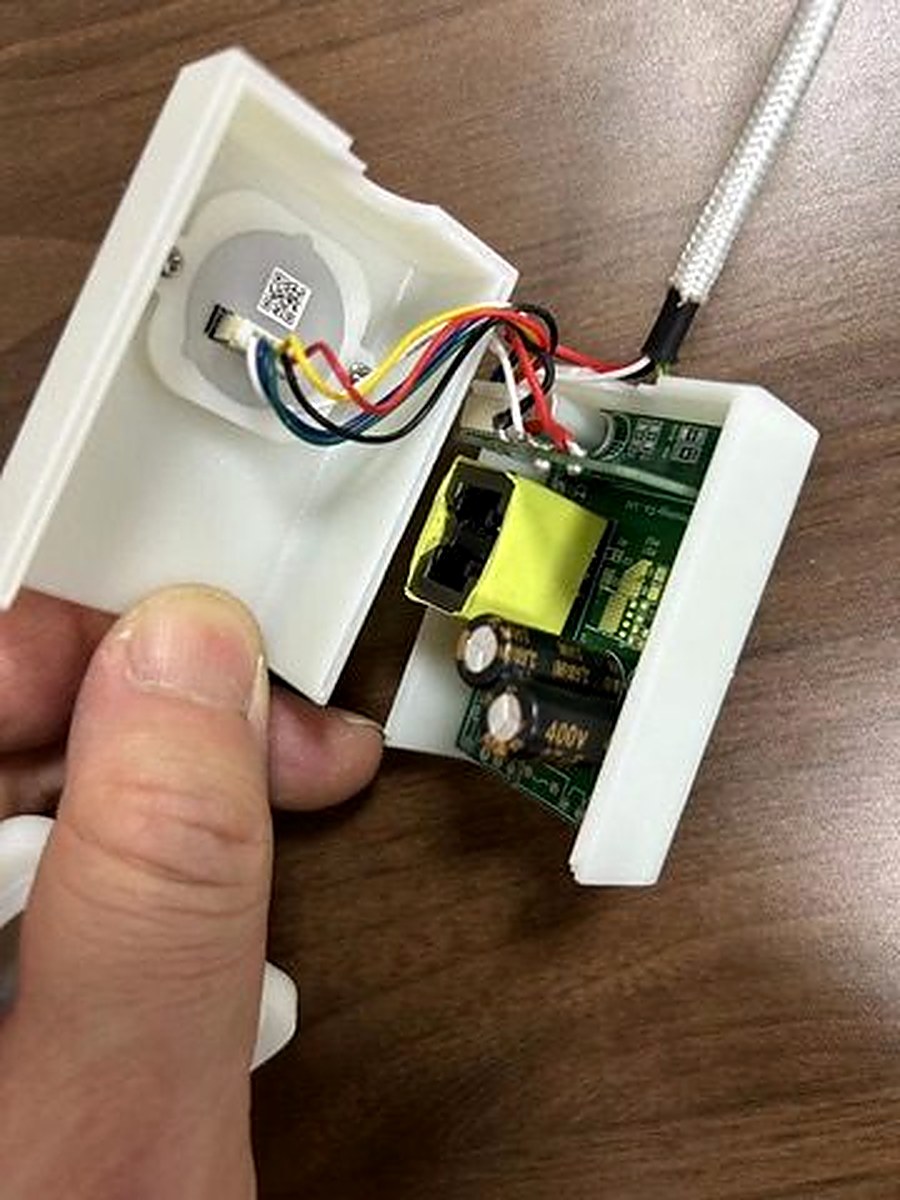 Integration test — power supply, fingerprint module, and wiring harness inside the prototype shell. Checking clearances and assembly sequence.
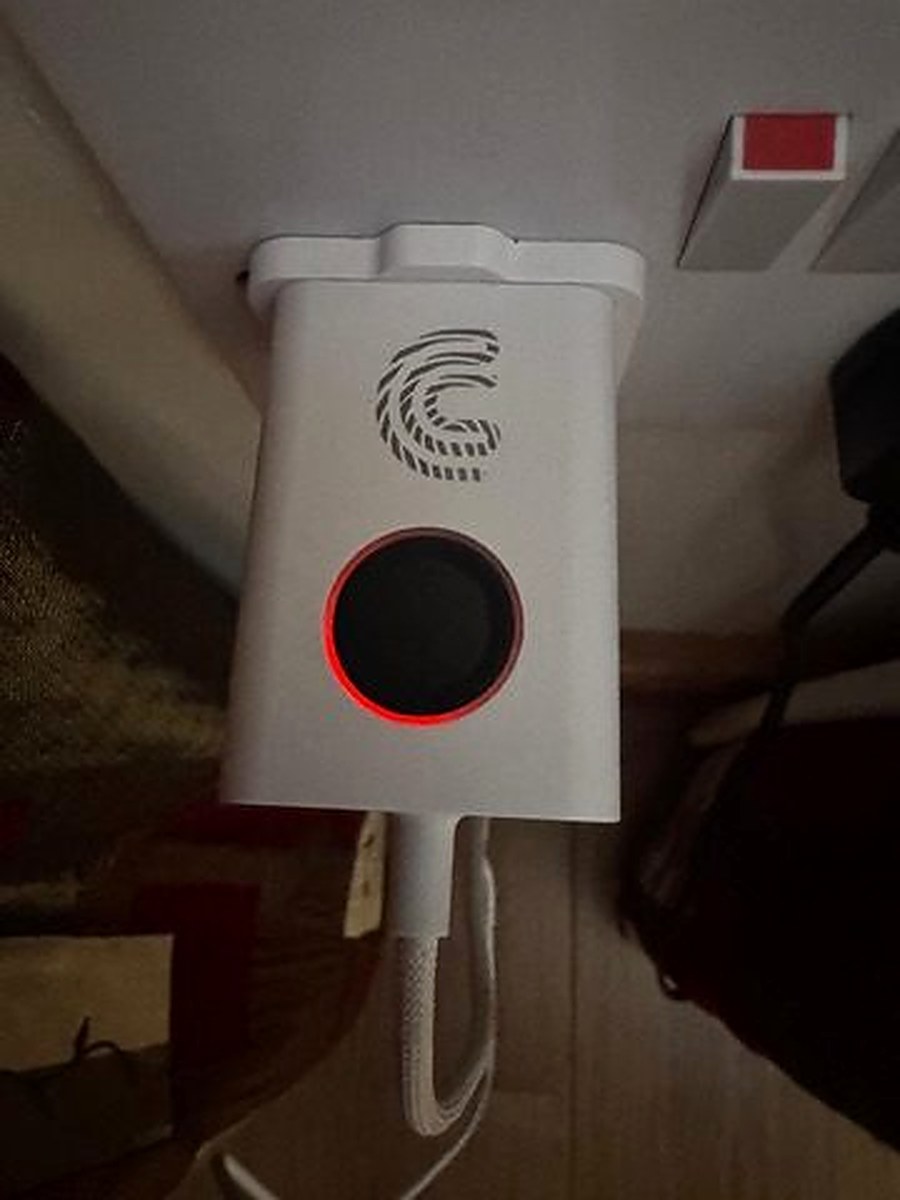
The fingerprint sensor sits on a separate daughter board, communicating with the main MCU over a serial interface. When an authorized fingerprint is detected, the firmware enables the power output stage. No match, no power. The LED ring around the sensor provides visual feedback — red for denied, green for authorized, breathing pattern for enrollment mode.
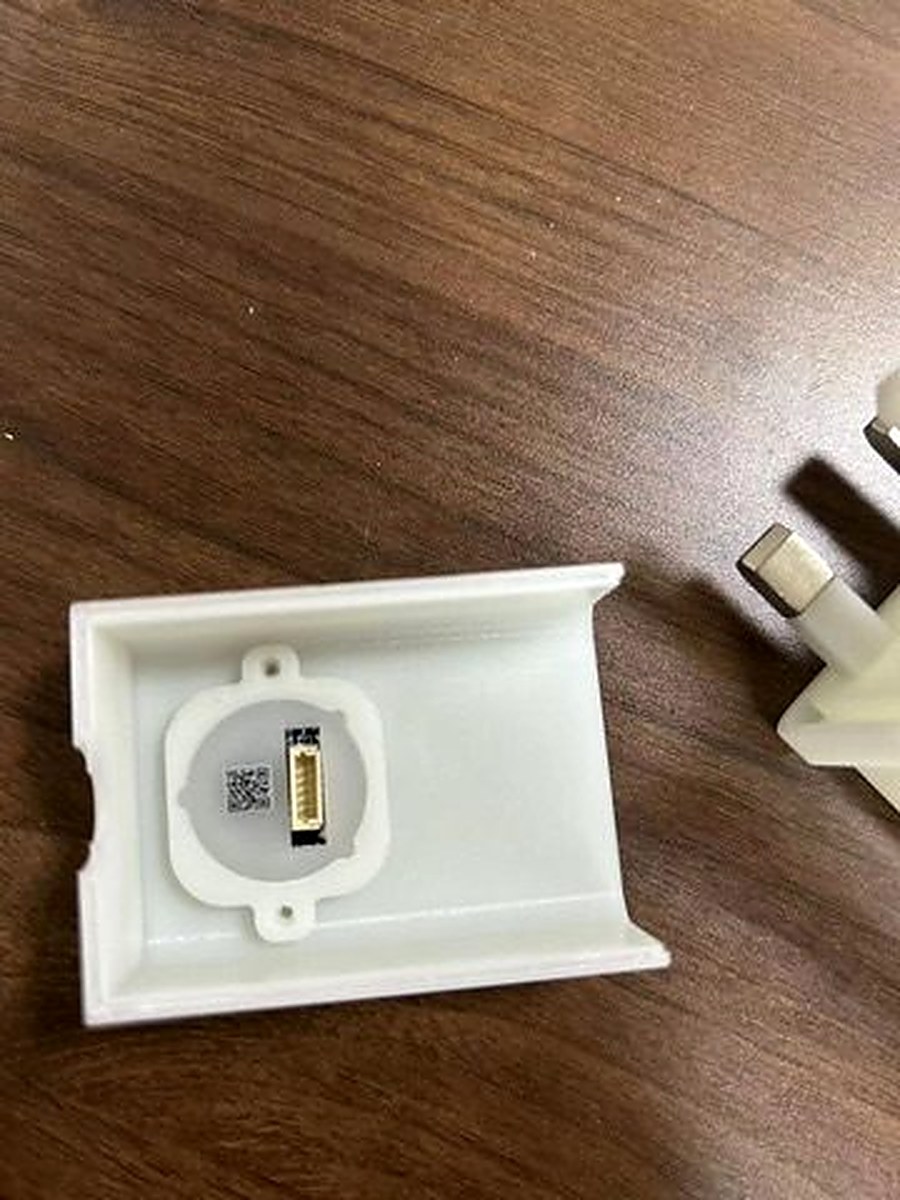 Fingerprint sensor module — capacitive sensor with custom connector interface. This is the component that makes a charger into a product.
From prototype to factory
Moving from working prototype to mass production is where most hardware products die. We’ve done this enough times to know where the landmines are.
Injection mold tooling. The enclosure design was optimized for injection molding from the start — uniform wall thickness, proper draft angles, strategic gate placement, no undercuts that would require side actions. The ultrasonic welding joint between the two shell halves was designed for a hermetic seal without screws, adhesive, or visible fasteners.
Factory test procedures. Every unit coming off the line gets tested: power output verification, USB-C PD protocol compliance, fingerprint sensor enrollment and match validation, LED function check, over-current protection trip point, thermal shutdown threshold. We wrote the test firmware and specified the test fixtures.
Component qualification. Every critical component was dual-sourced. The fingerprint sensor, the main transformer, the USB-C controller IC — all qualified with at least one alternate supplier to prevent single-source production stops.
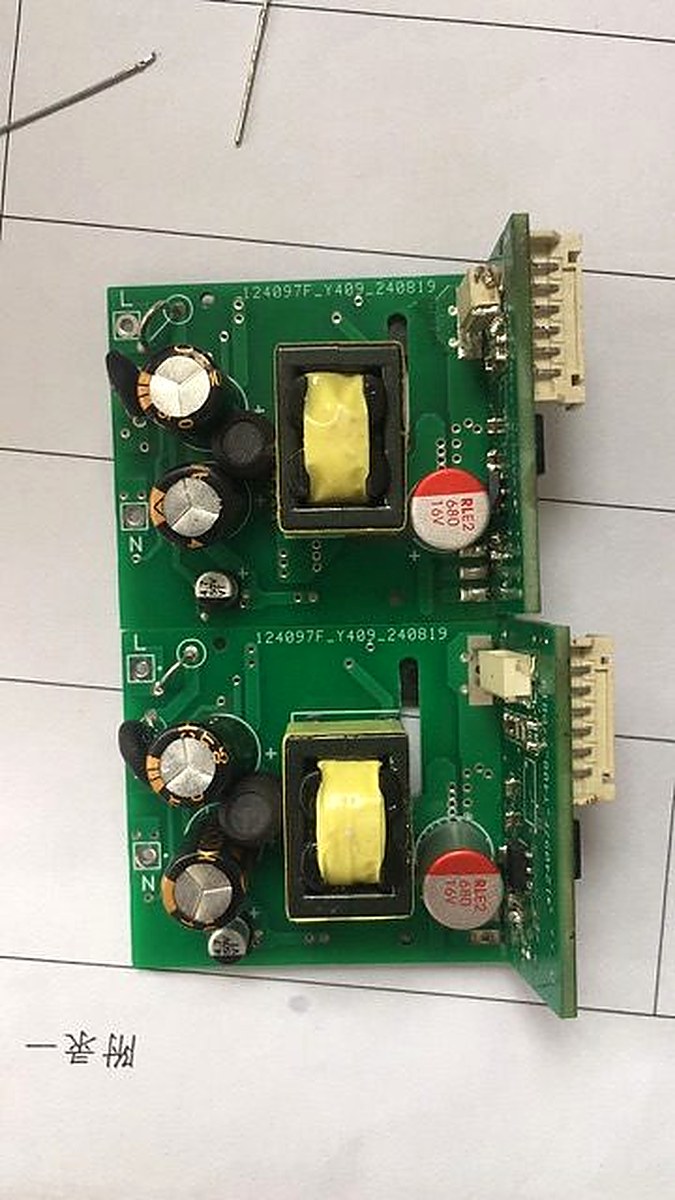
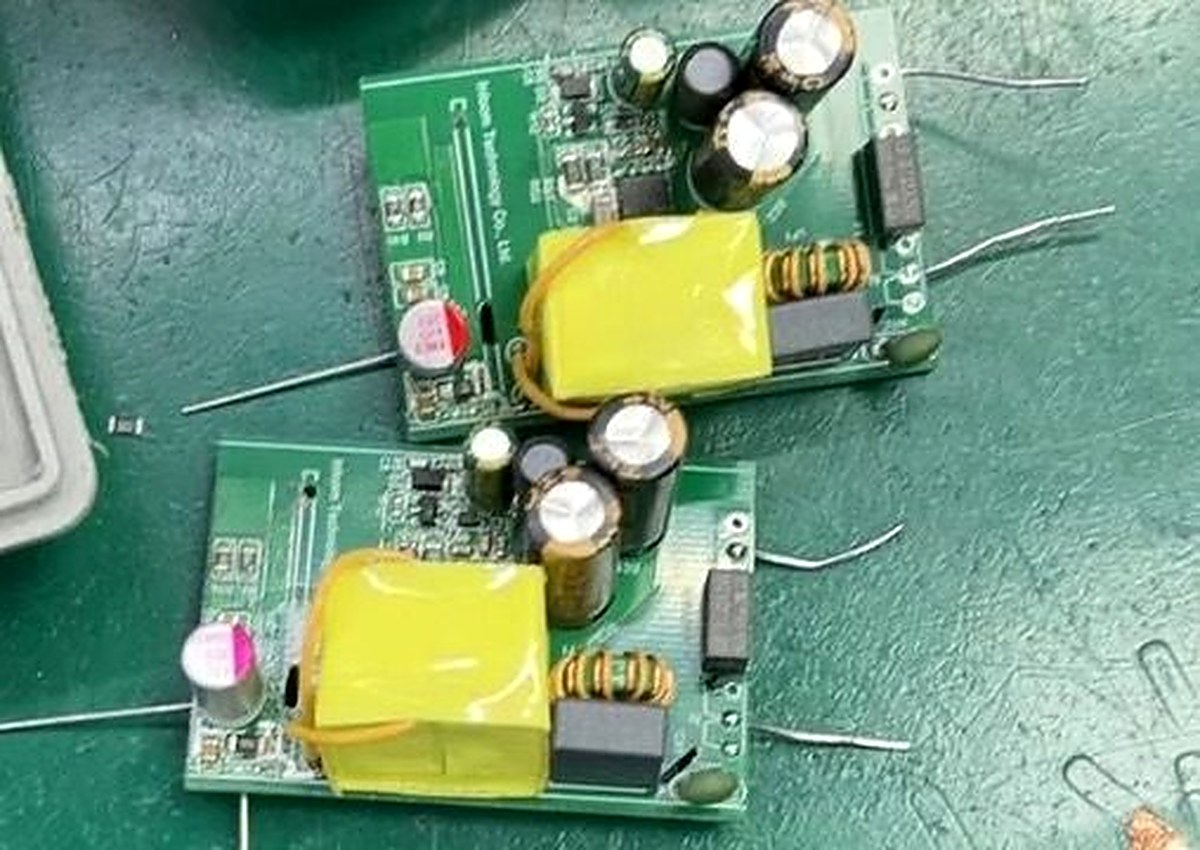 Production PCBs on the factory bench. Component placement verified against golden sample before line start.
 QC comparison — two production boards checked for solder quality, component orientation, and transformer winding consistency.
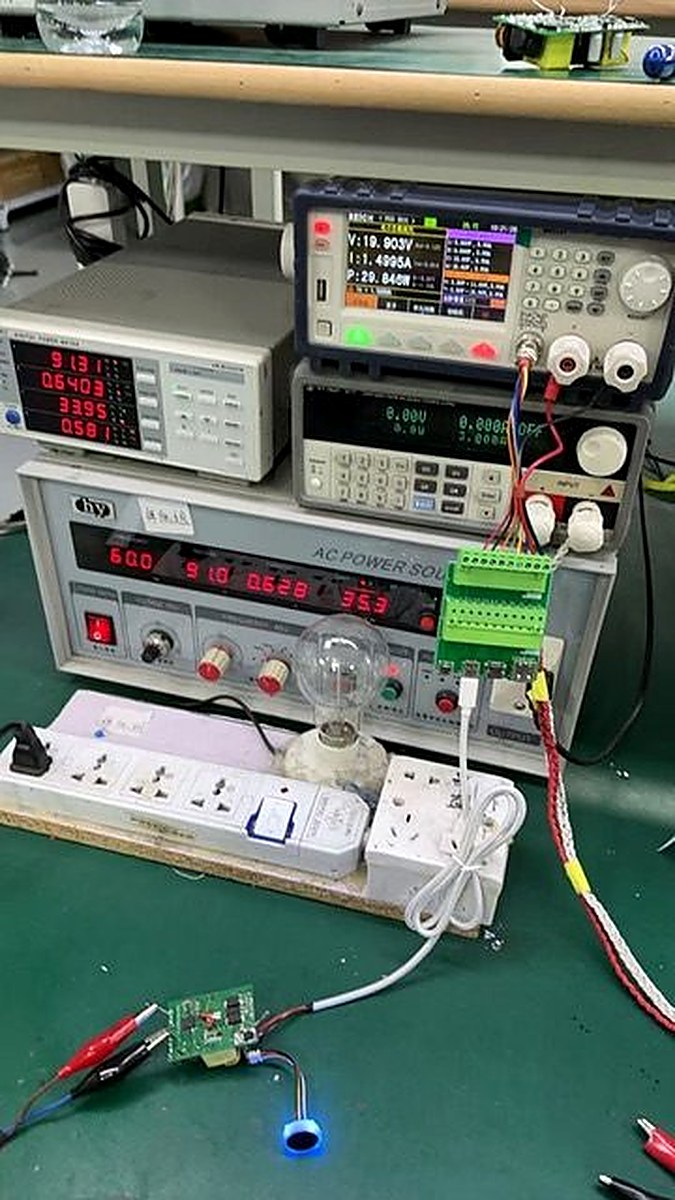 Factory test bench — AC power source, electronic load, power analyzer. Every board validated for output voltage, current regulation, efficiency, and protection thresholds before assembly.
The shipped product
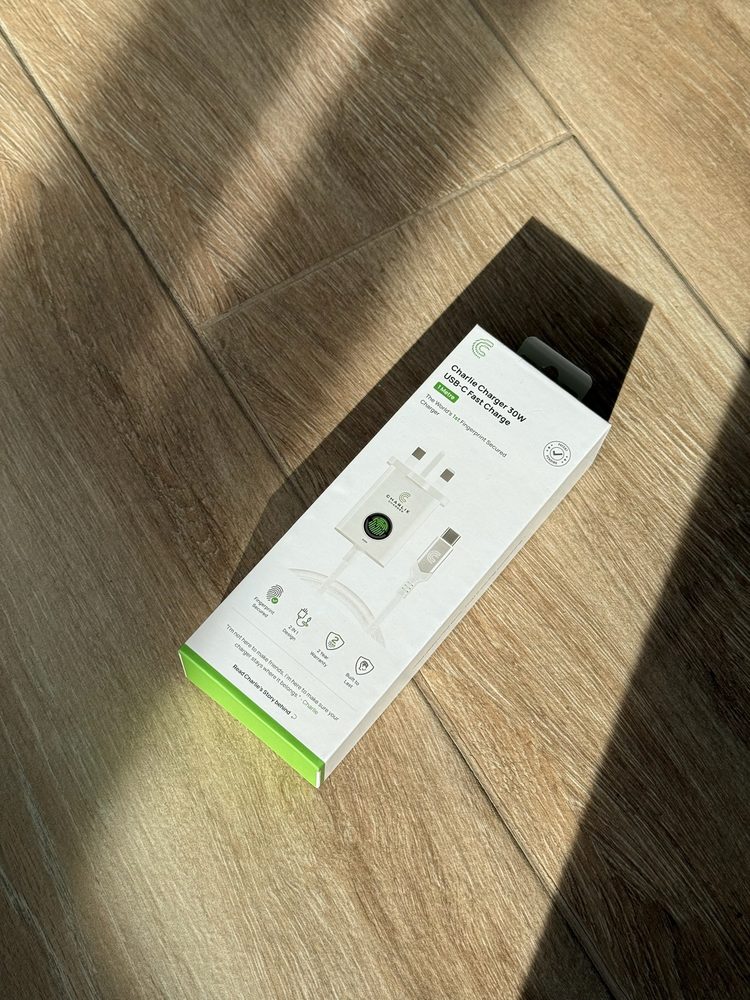
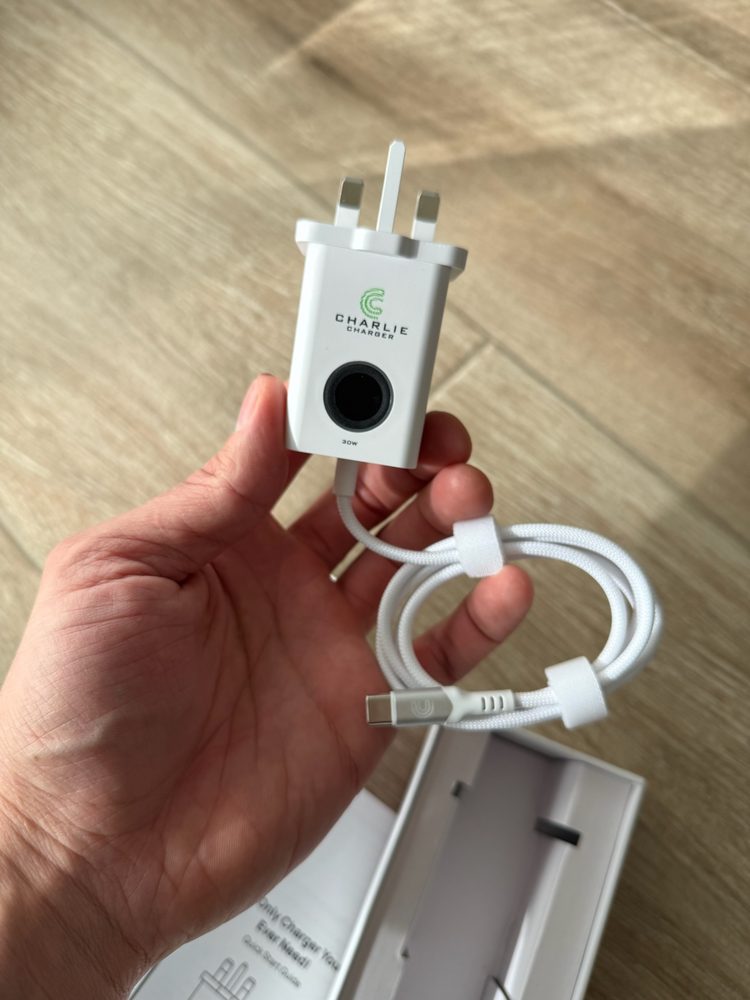
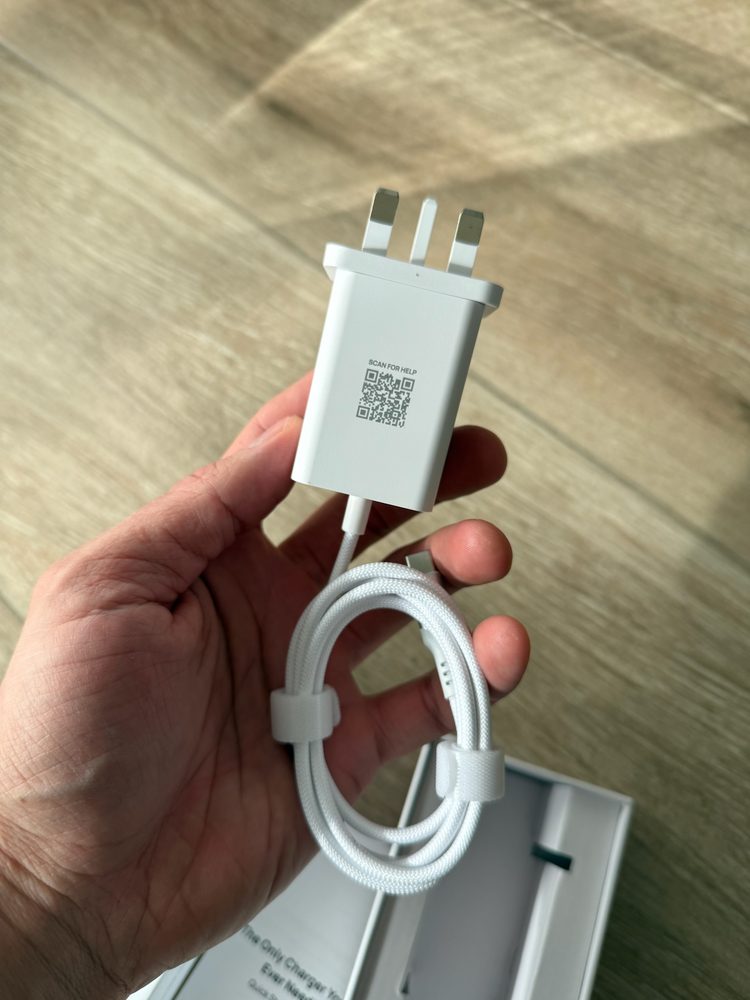
The result: a 30W USB-C fast charger with integrated fingerprint authentication. Compact enough to sit next to any plug in the house. Braided cable that won’t fray. Multiple color options. Clean retail packaging designed for shelf and e-commerce presentation.
Retail packaging — designed for both shelf display and e-commerce. Clean, premium, informative.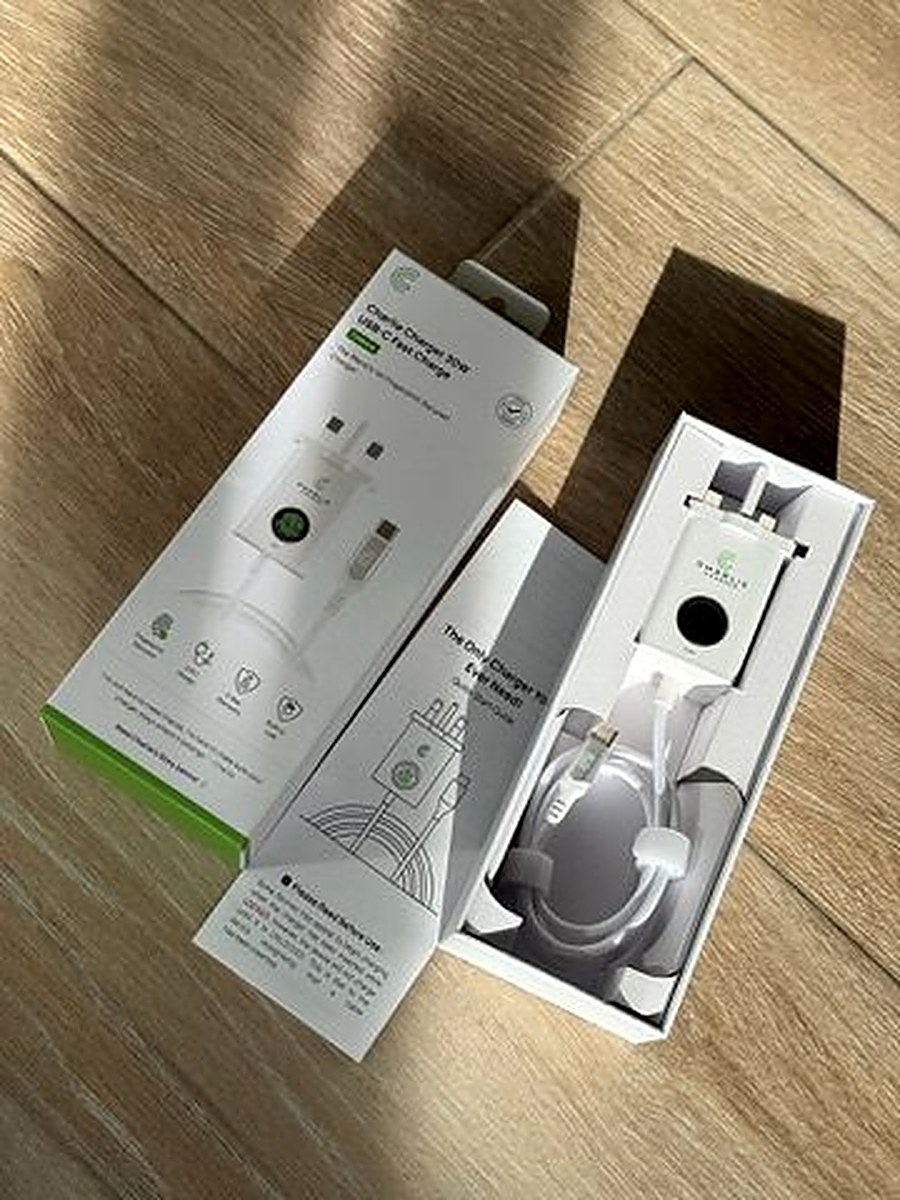 Unboxing — charger, braided USB-C cable, quick start guide. Everything a customer needs, nothing they don’t.
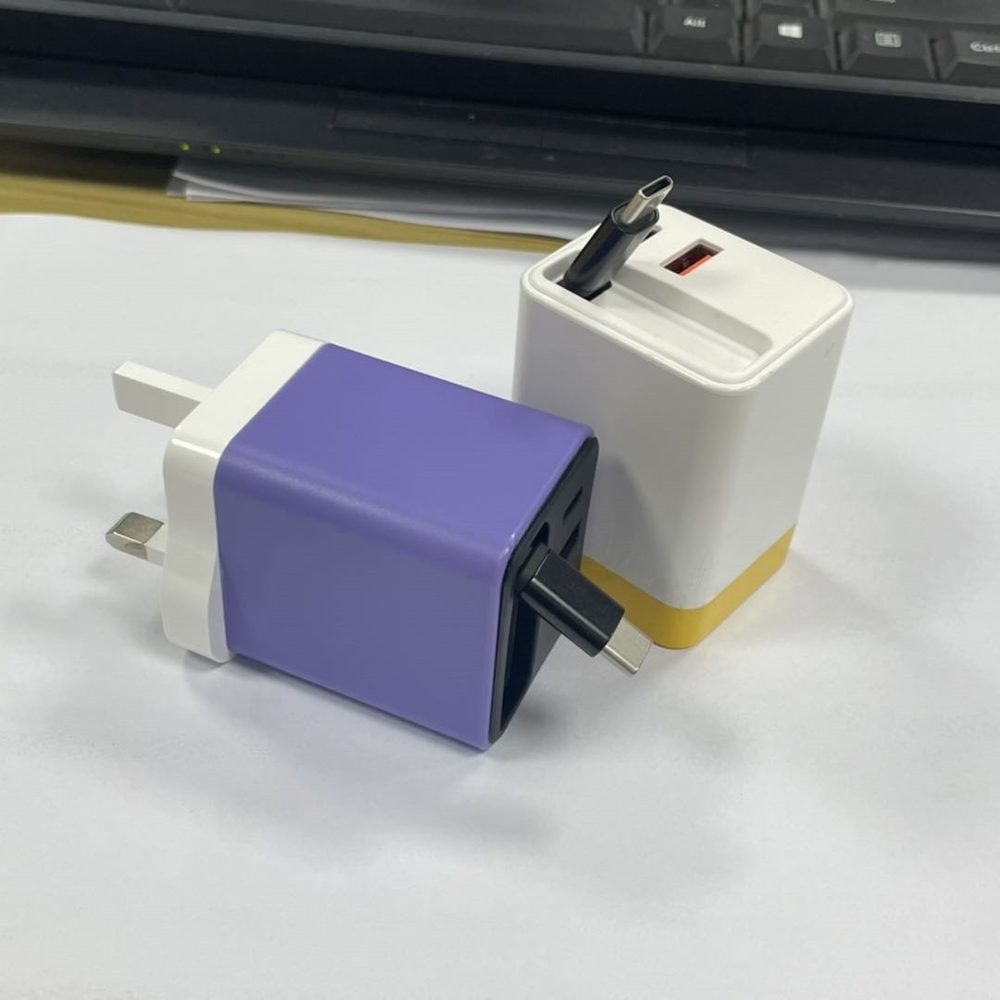
 Color variants in production — same internal platform, different colorways for market segmentation. Multiple USB output configurations.
What we delivered
The full scope, end to end:
Product definition. Translated a consumer insight (charger theft) into a viable product specification — feature set, target BOM cost, certification requirements, market positioning.
Industrial design. Complete enclosure from concept through CAD, prototyping (20+ iterations), DFM optimization, and injection mold tooling. Four international plug variants from a shared internal platform.
Electronics. Custom 30W USB-C PD power supply designed from scratch. Fingerprint sensor integration. LED driver. MCU selection and circuit design. EMC pre-compliance and layout optimization.
Firmware. Biometric enrollment and matching algorithms. USB-C Power Delivery negotiation. Fingerprint-gated power control. LED status animation. Production test mode. OTA update architecture.
Mechanical. Injection mold design with ultrasonic welding joints. Thermal management without active cooling. Cable strain relief. Drop-test geometry optimization.
Manufacturing. Factory selection and qualification in Asia. Injection mold tooling procurement. Ultrasonic welding fixture design. SMT and through-hole assembly line setup. Production test procedure and fixture specification. QC protocols. Retail packaging design and procurement.
Patent. Prepared and filed patent application covering the biometric-gated charging mechanism.
Timeline
Product definition and industrial design. Translated the founder’s concept into a product specification. Began CAD modeling, plug variant architecture, and initial 3D-printed prototypes. Fingerprint sensor module evaluation and selection.
Electronics and firmware development. Custom power supply PCB designed and prototyped. Biometric firmware written and validated. First functional prototypes with working fingerprint authentication. Dozens of enclosure iterations tested.
DFM and tooling. Enclosure finalized for injection molding. Ultrasonic welding joint geometry validated. Mold tooling ordered. Component sourcing locked. BOM cost targets confirmed. Patent application filed.
Factory setup and pilot production. First injection-molded parts. Assembly line configured. Test fixtures built and validated. Pilot run completed. Quality issues identified and corrected before volume ramp.
Mass production and market launch. Volume manufacturing running. Multiple color variants in production. Retail packaging finalized. Product shipping to customers. charliecharger.tech live.
What this demonstrates
Charlie Charger is a textbook example of what null2.one does: take an idea that doesn’t exist yet and turn it into a real, manufactured, consumer-ready product.
Not just the enclosure. Not just the PCB. Not just the firmware. Everything — from the first conversation about what this product should be, through the dozens of 3D-printed prototypes that didn’t quite work, through the factory in Asia where units come off the line tested and boxed.
This is what 0→1 product development actually looks like. It’s not a rendering and a pitch deck. It’s custom power electronics, biometric firmware, injection mold tooling, ultrasonic welding fixtures, factory test benches, and a product that works when a customer plugs it into their wall.
Building a consumer electronics product from scratch?
We’ve taken products from concept to mass manufacturing — custom electronics, embedded firmware, injection molding, and factory setup. Not theoretical. Shipped.
Start a conversation